Bhujodi- The Living Legacy of Kutch
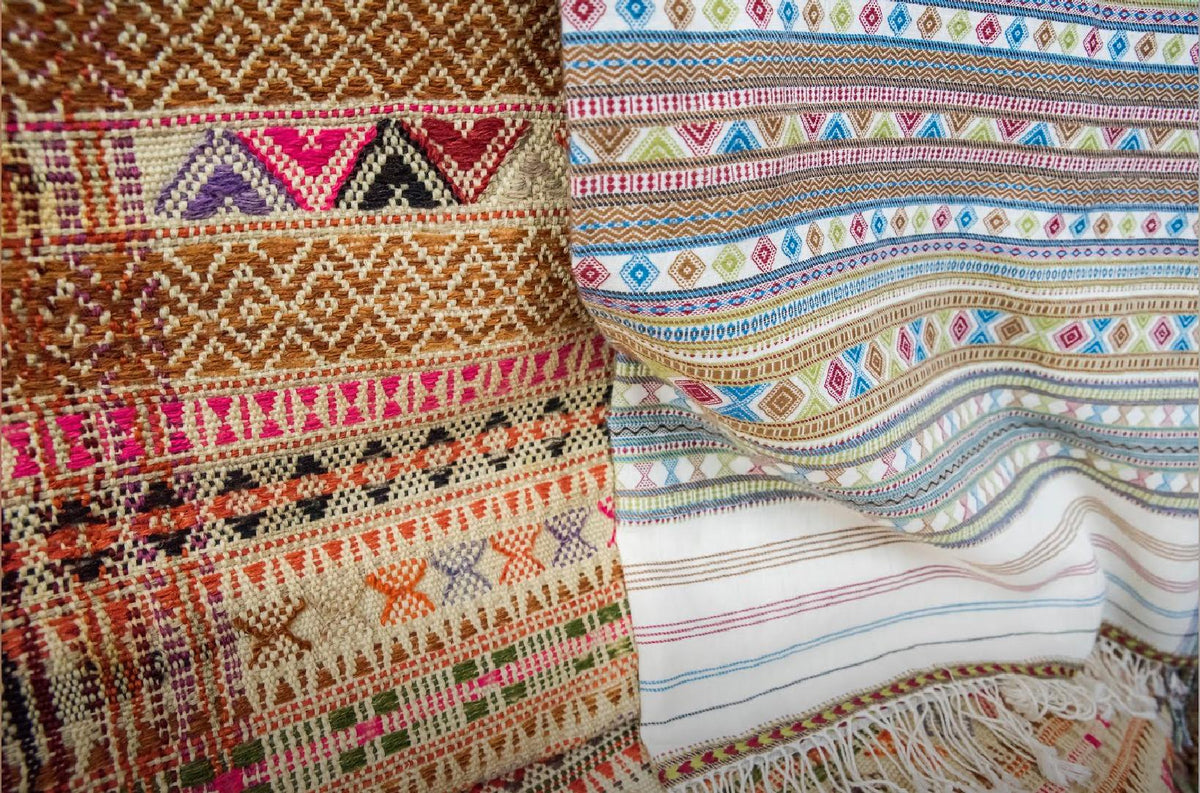
Woven in the heart of Kutch, Gujarat- Bhujodi textiles have long been a cherished part of India's handloom heritage. Named after the historic weaving village of Bhujodi, located about 8 km from Bhuj, these textiles are known for their bold geometric patterns and rich textures. Every piece reflects the people, culture, and landscape that shaped it. A genuine Bhujodi saree or shawl is a wearable architectural masterpiece, and before you drape or wrap yourself in one, let's travel back to where this remarkable craft began.
Legend speaks of a wealthy Rabari nomad bride who traveled to the desert of Kutch five hundred years ago, bringing a skilled weaver as part of her dowry to craft whatever her heart desired. This spark evolved into a marvelous barter ecosystem. For centuries, the Rabari community supplied raw wool from their sheep and goats, while the Vankars (the weaver community) cleaned, spun, dyed, and wove the fibers into sturdy dhablas (blankets), shawls, and veils that protected them from bitter desert nights. As lifestyles evolved, so did the craft. Today, Bhujodi artisans work with Kala cotton, silk, wool, and cotton blends, creating sarees, dupattas, shawls, stoles, and home furnishings while preserving the distinctive motifs that continue to define the tradition.
What makes you pause when you look at a Bhujodi saree or shawl?
At first glance, the precise, raised motifs look exactly like intricate hand-embroidery. But if you look closer, you will realise that it is a visual illusion- they are woven directly into the fabric. The organic yarn, often indigenous, rain-fed Kala cotton or fine silk is soaked in a warm paste of boiled wheat flour and water to give it strength, sun-dried in open fields, and meticulously combed. Using the traditional extra-weft technique, the weaver then manually lifts selected warp threads and inserts additional weft yarn to create raised geometric patterns. It is a slow, meditative ballet of hands and feet inside a rectangular pit dug into the earth. Every zigzag comes alive as a Khungri motif, while every four-sided Chaumukh pattern unfolds into a beautiful, spiritual mandala. It takes a family up to fifteen days of seamless coordination to breathe life into a single saree.
Ways to style your Bhujodi
For a formal or festive look, pair a fine silk-cotton Bhujodi saree with its signature tasseled pallu, draped over an intricate Kutchi mirror-work blouse or a modern crop top. Accessorize the look with minimal raw silver jewelry, a fitted waist belt, or classic juttis.
For work or intimate celebrations, let the saree take centre stage by pairing it with a plain linen blouse and minimal accessories.
If you want to push creative boundaries, try layering a textured Kala cotton Bhujodi saree over a tailored blazer or a high-necked turtleneck instead of a traditional blouse.
A Bhujodi dress or Anarkali would add a modern touch to your wardrobe. A plain kurta paired with a Bhujodi dupatta or stole creates an elegant and chic look, while a simple Bhujodi kurta can never go wrong.
You can also experiment with unconventional drapes, such as the pant-style drape, allowing the bold graphic borders to frame your silhouette like a modern work of art.
Bhujodi is equally beautiful beyond clothing. Shawls can be layered over neutral outfits, while handcrafted textiles can also be repurposed as elegant throws or cushion covers that bring warmth and texture to modern homes.
Care & Maintenance
To maintain the structural integrity and vibrant, natural dyes of your handcrafted Bhujodi pieces, gently hand wash them in cold water with mild liquid detergent, or opt for professional dry cleaning. Never wring or twist the fabric, instead, lay them flat to dry in a shaded, airy spot away from harsh, direct sunlight to protect the natural fibers. Fold carefully and store them in a breathable muslin or cotton cloth rather than plastic, which traps moisture. If ironing is required, use a low temperature on the reverse side of the fabric.